Homeowner Roof Cleaning Resources

Everything you need to understand what's growing on your roof, whether it's actually a problem, and the safest way to deal with it.

Get a Quote
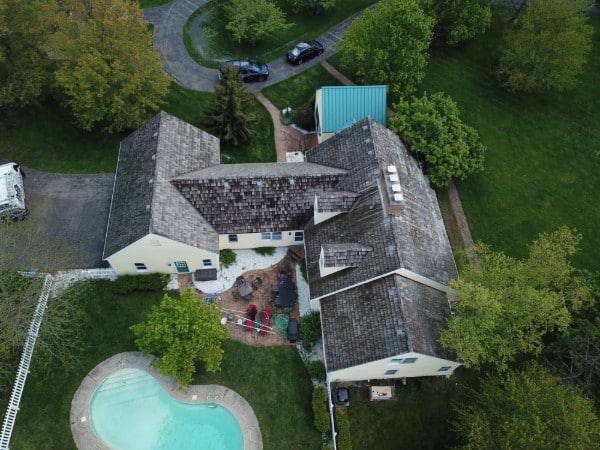
Aerial drone view of black algae streaks on shingle roof in Columbus, Ohio β€” Gloeocapsa Magma discoloration

What Are Those Black Streaks on My Roof?

Those dark lines running down your shingles aren't dirt, and they're not your roof aging. They're a living organism called Gloeocapsa Magma β€” a cyanobacteria that feeds on the crushed limestone in your shingles. Ohio's humid summers are ideal for it to spread.

The bad news: it's actively degrading your roof. The good news: it's completely treatable without replacing a single shingle.

Read the full guide β†’

Guides & Articles

In-depth guides written for Columbus homeowners β€” no jargon, no upsells.

Drone photo showing black algae streaks across shingle roof in Columbus, Ohio

Gloeocapsa Magma: The Real Cause of Black Roof Streaks

Learn what this cyanobacteria actually is, why it thrives in Ohio, how fast it spreads, and what it's doing to your shingles right now.

Read Guide β†’
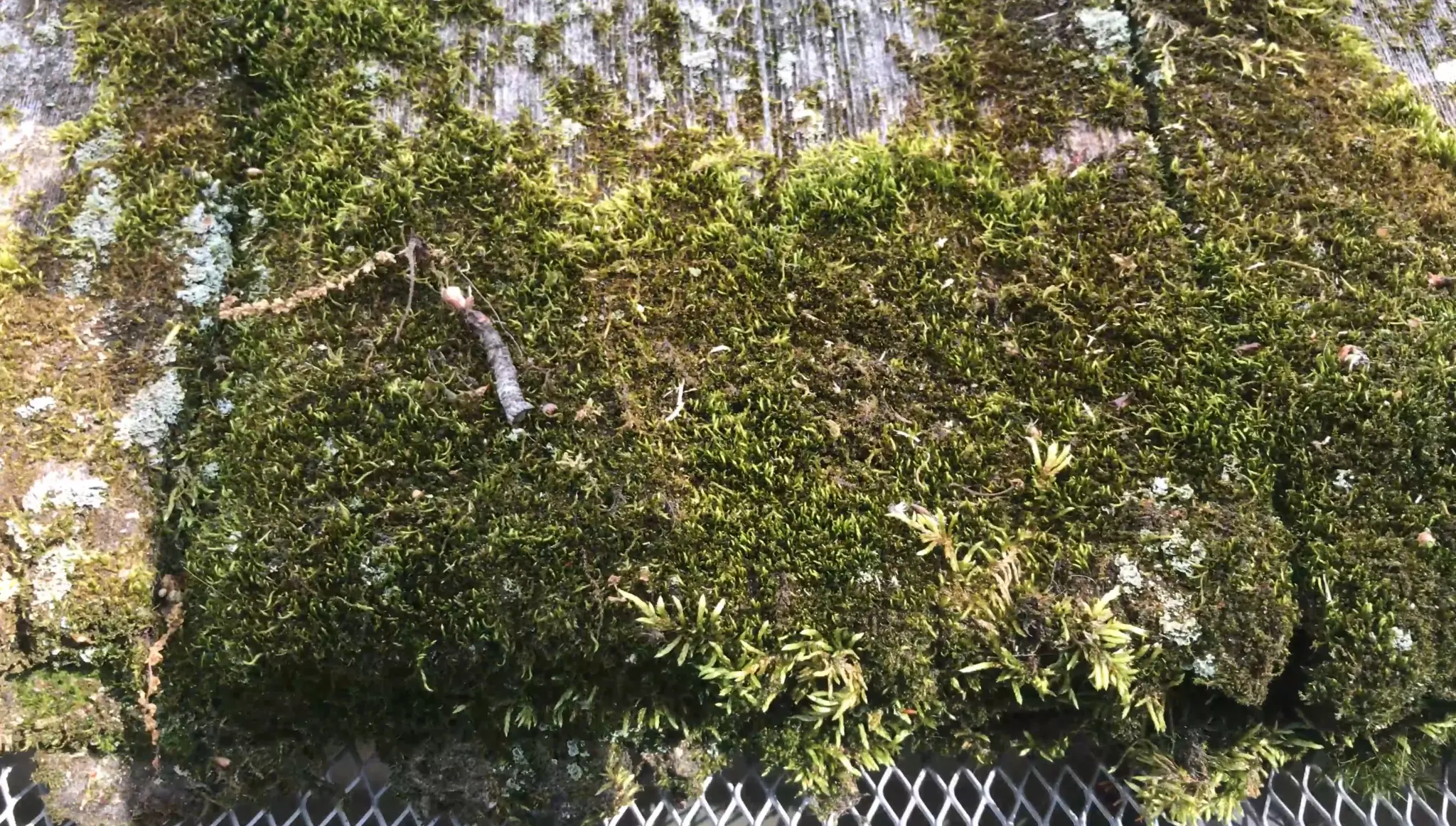
Heavy moss growth on cedar shake roof in Dublin, Ohio β€” rhizoids lifting shingles and trapping moisture

Moss on Your Roof: Cosmetic Problem or Structural Threat?

Moss looks harmless, but its root-like rhizoids physically lift shingles and trap moisture against the deck. Here's how to assess the damage and what to do about it.

Read Guide β†’
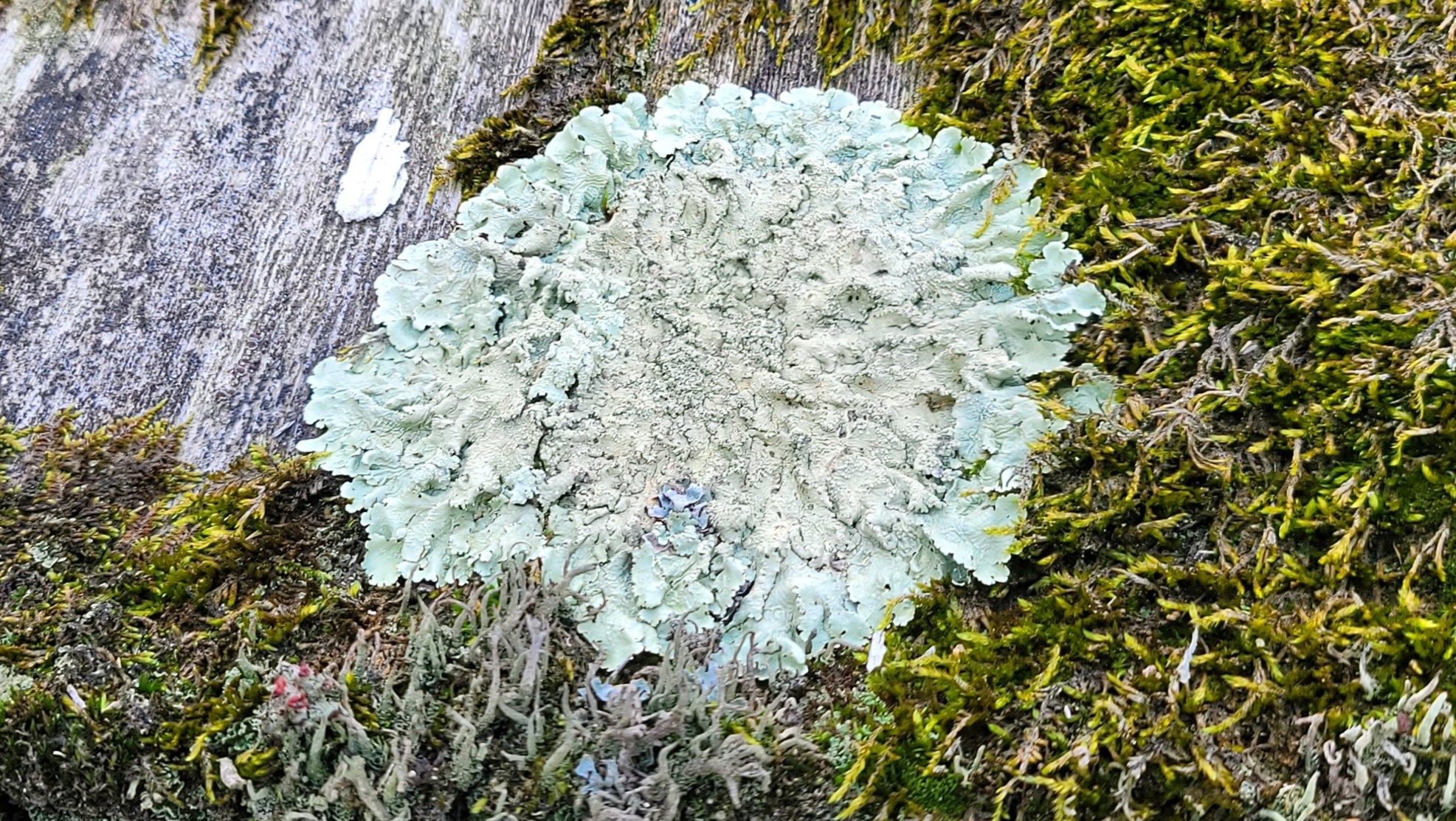
Close-up of lichen growth bonded to cedar roof shingle surrounded by moss in Columbus, Ohio

Lichen on Your Roof: Why It's the Hardest Growth to Remove

Lichen is a symbiotic organism β€” part algae, part fungus β€” that bonds directly to roofing material with a cement-like grip. Pressure washing makes it worse. Here's the right approach.

Read Guide β†’
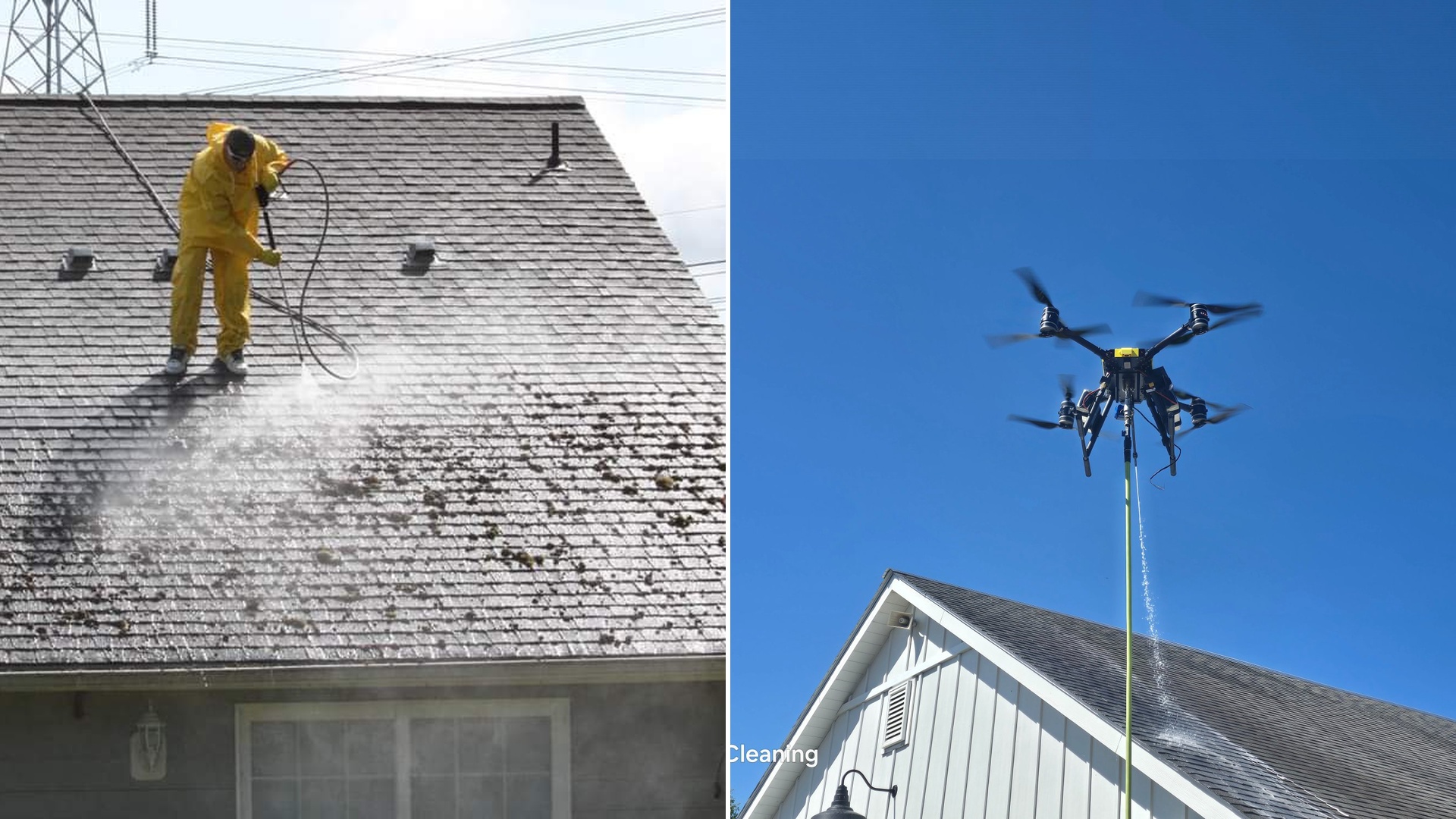
Pressure washing vs. drone roof cleaning comparison β€” traditional high-pressure method versus Forza drone treatment in Columbus Ohio

Treatment vs. Pressure Washing: What Every Homeowner Needs to Know

Pressure washing a roof feels satisfying β€” but it will remove the granules that protect your shingles and void your warranty. Here's why the way we gently clean a roof is the only way to clean it without damage.

Read Guide β†’
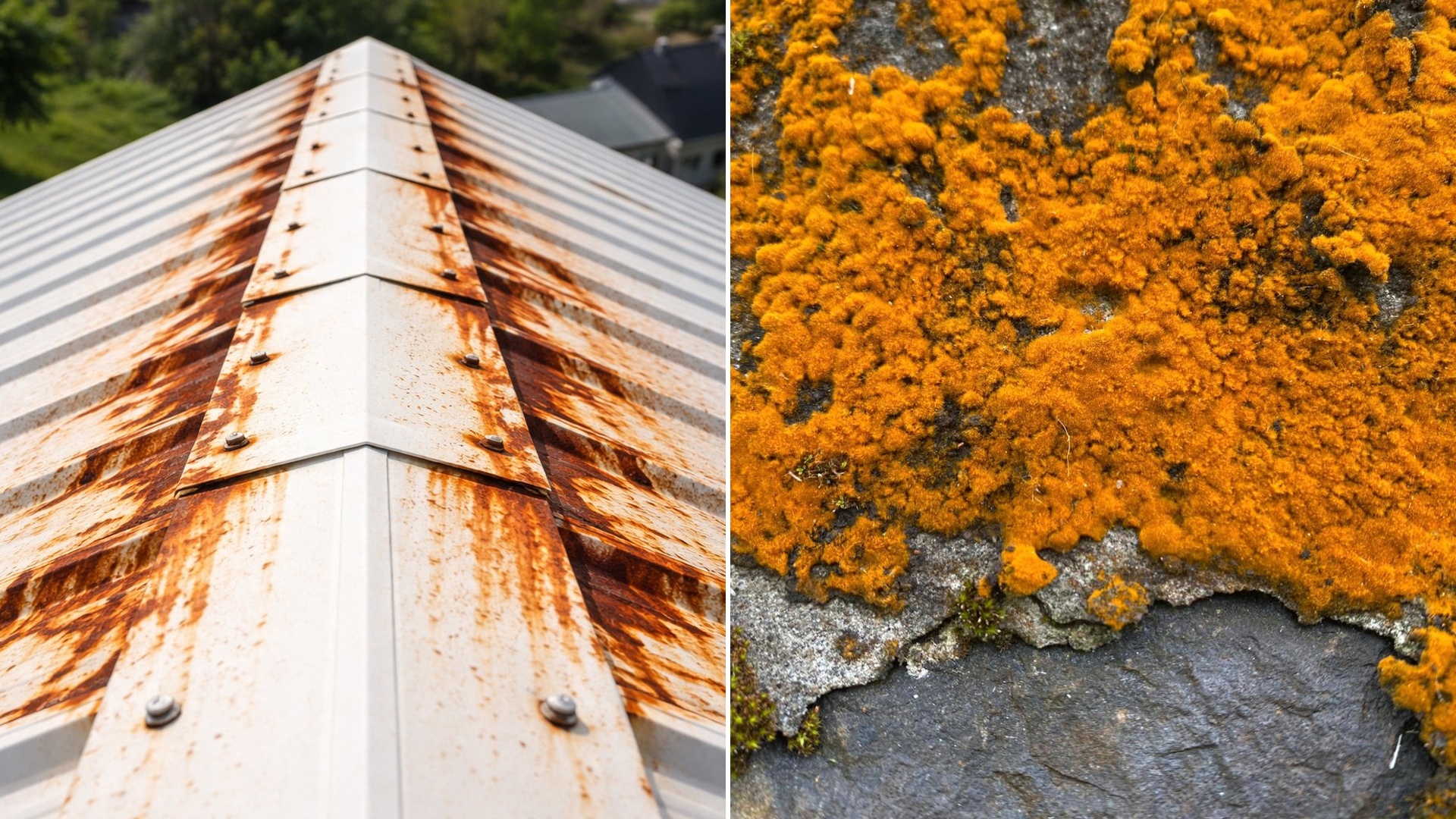
Orange rust streaks and algae stains on metal roof panels β€” common metal roof discoloration in Columbus Ohio

Orange Streaks on a Metal Roof: Rust, Algae, or Oxidation?

Not all orange stains on metal roofs are rust. Learn how to tell the difference between surface oxidation, algae staining, and actual corrosion β€” and what each one means for your roof's lifespan.

Read Guide β†’
Cedar shake roof with algae growth

Why Cedar Shake Roofs Need Special Care β€” And What Ruins Them

Cedar is a natural, porous wood that breathes. Pressure washing, bleach, and improper cleaners strip the natural oils and split the shakes. Here's the only safe way to clean cedar.

Read Guide β†’
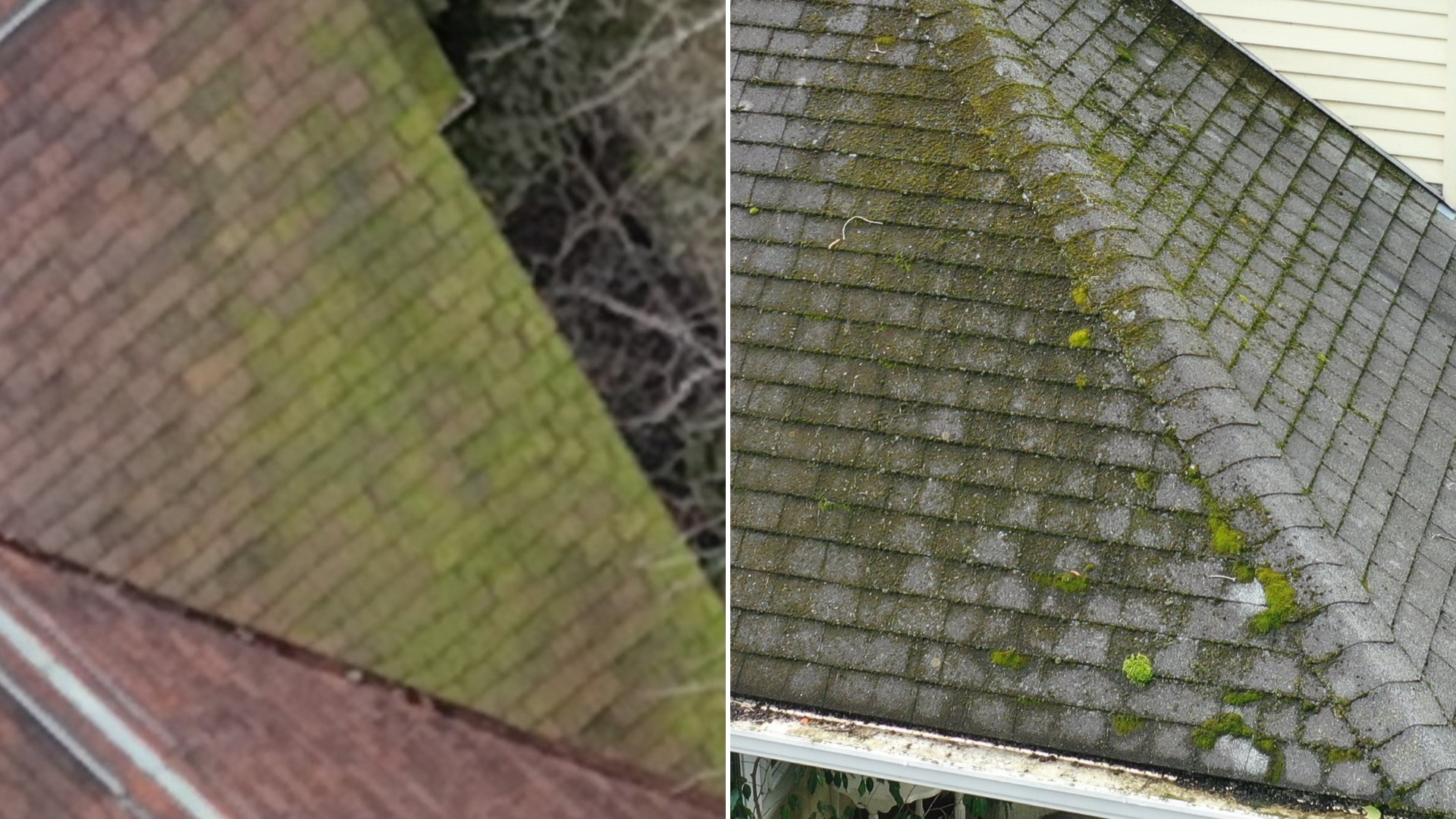
Side-by-side comparison of green algae growth and moss patches on shingle roofs in Columbus, Ohio

Green Algae vs. Moss: What's the Difference and Does It Matter?

Both are green, both grow on roofs β€” but they're very different organisms with different risks and different treatments. Knowing which one you have changes how you approach the fix.

Read Guide β†’
Ohio homeowner wondering how often to schedule professional roof cleaning maintenance

How Often Should You Clean Your Roof in Ohio?

Columbus's climate β€” humid summers, wet springs, and shaded lots β€” creates near-perfect conditions for bio-growth. Here's a practical maintenance schedule based on your roof type and tree coverage.

Read Guide β†’
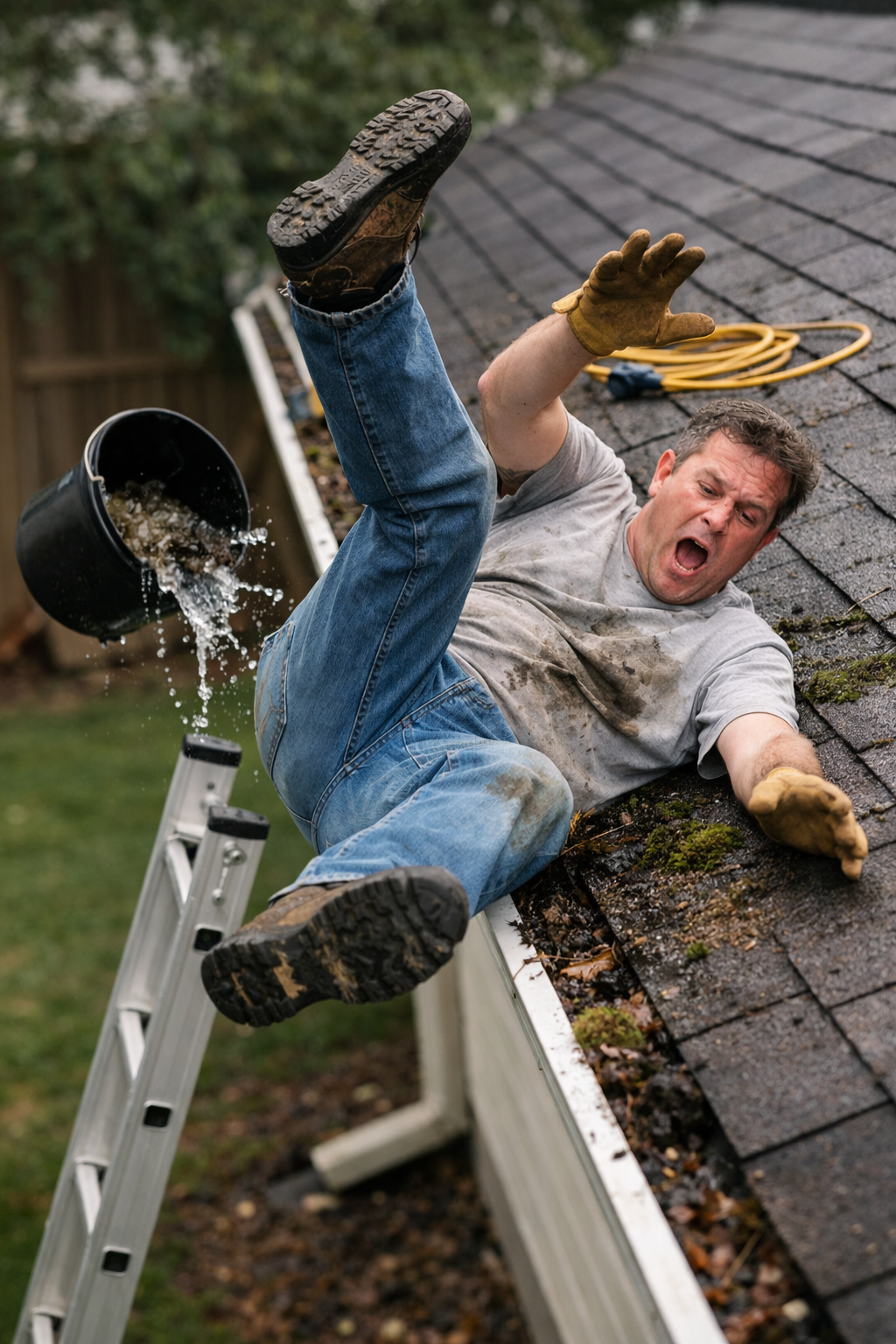
Homeowner falling off ladder while attempting DIY roof cleaning β€” why professional roof cleaning is safer

Can You Clean Your Own Roof? An Honest Assessment.

We'll be straight with you: some homeowners can safely treat minor algae growth themselves. But there are real risks β€” to your roof, your warranty, and your safety. Here's how to decide.

Read Guide β†’
Knowledge Base

Comprehensive Guides & Resources

In-depth, expert-written guides for homeowners, home sellers, buyers, realtors, and property managers. Free to read β€” no email required.

🏠 Homeowner Guides

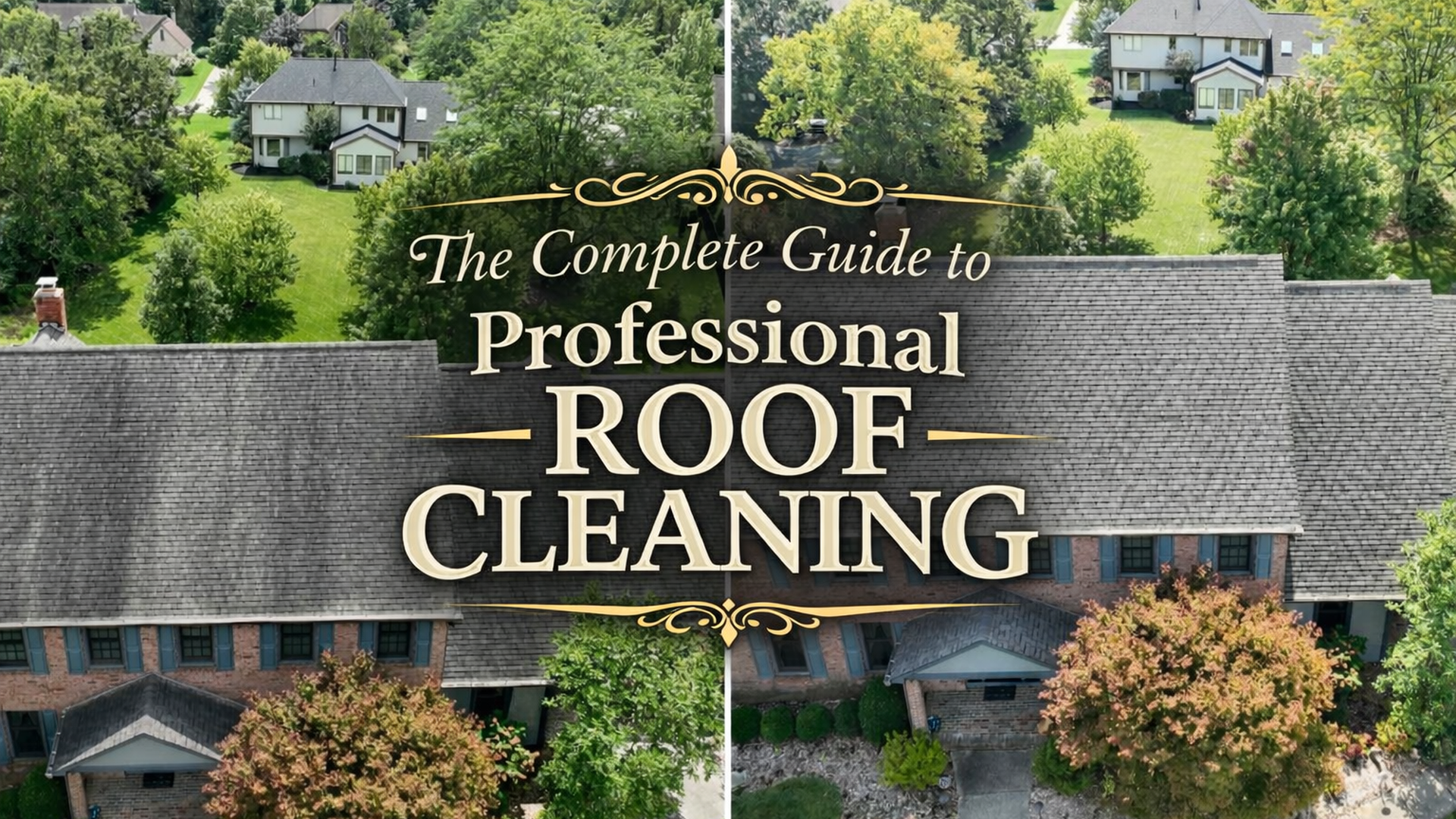
The Complete Guide to Professional Roof Cleaning β€” before and after drone aerial view of shingle roof cleaning in Columbus Ohio

The Complete Guide to Professional Roof Cleaning

Everything you need to know about why roofs get dirty, how professional treatments work, and how to choose the right company. 3,100+ words of expert guidance.

Read Full Guide β†’
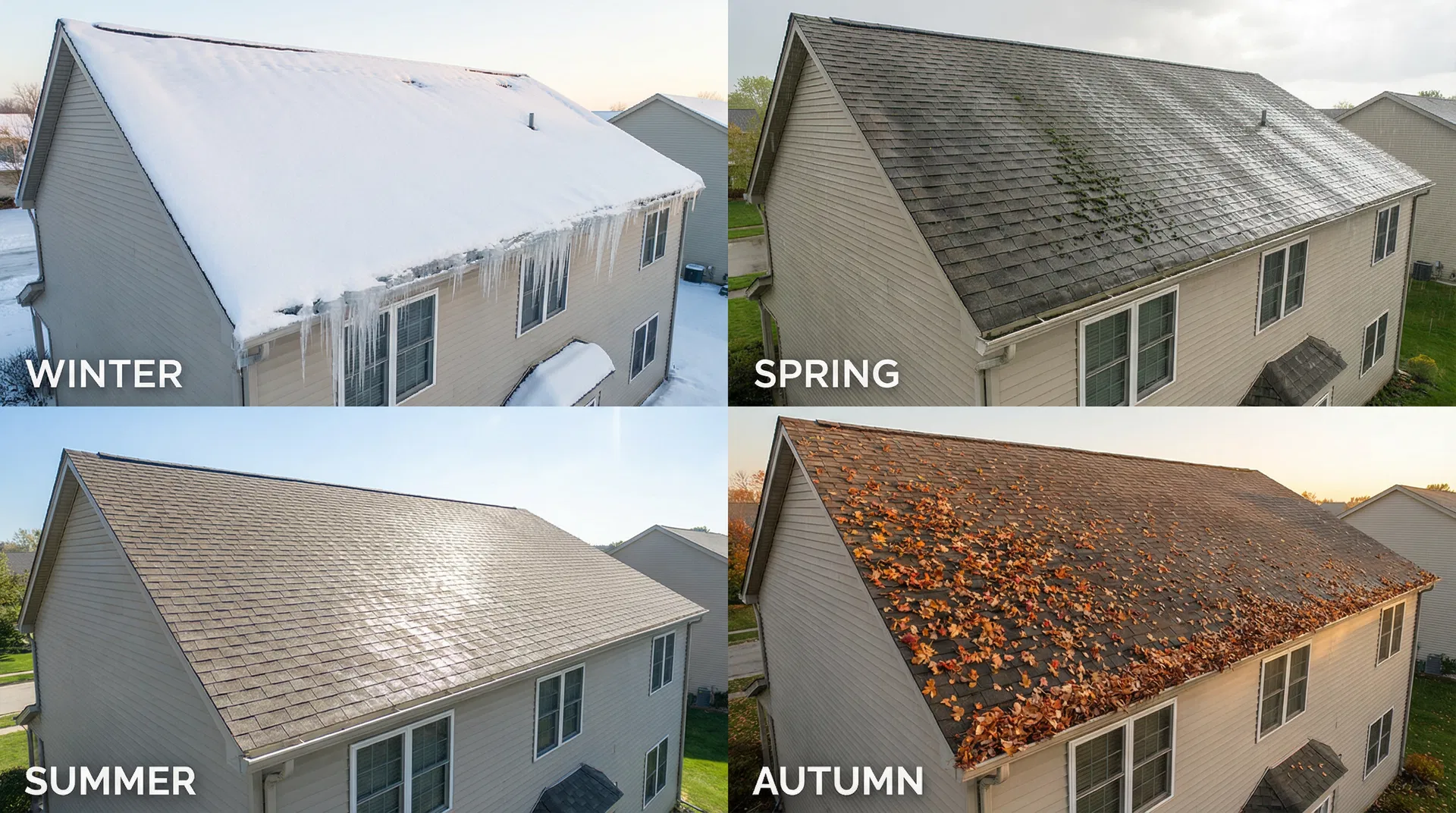
Ohio homeowner roof maintenance calendar β€” four seasons showing winter ice dams, spring algae growth, summer UV wear, and fall debris and gutters

The Ohio Homeowner's Roof Maintenance Calendar

Month-by-month maintenance schedule tailored for Ohio's climate. Know exactly when to inspect, clean gutters, and schedule professional treatment.

Read Full Guide β†’
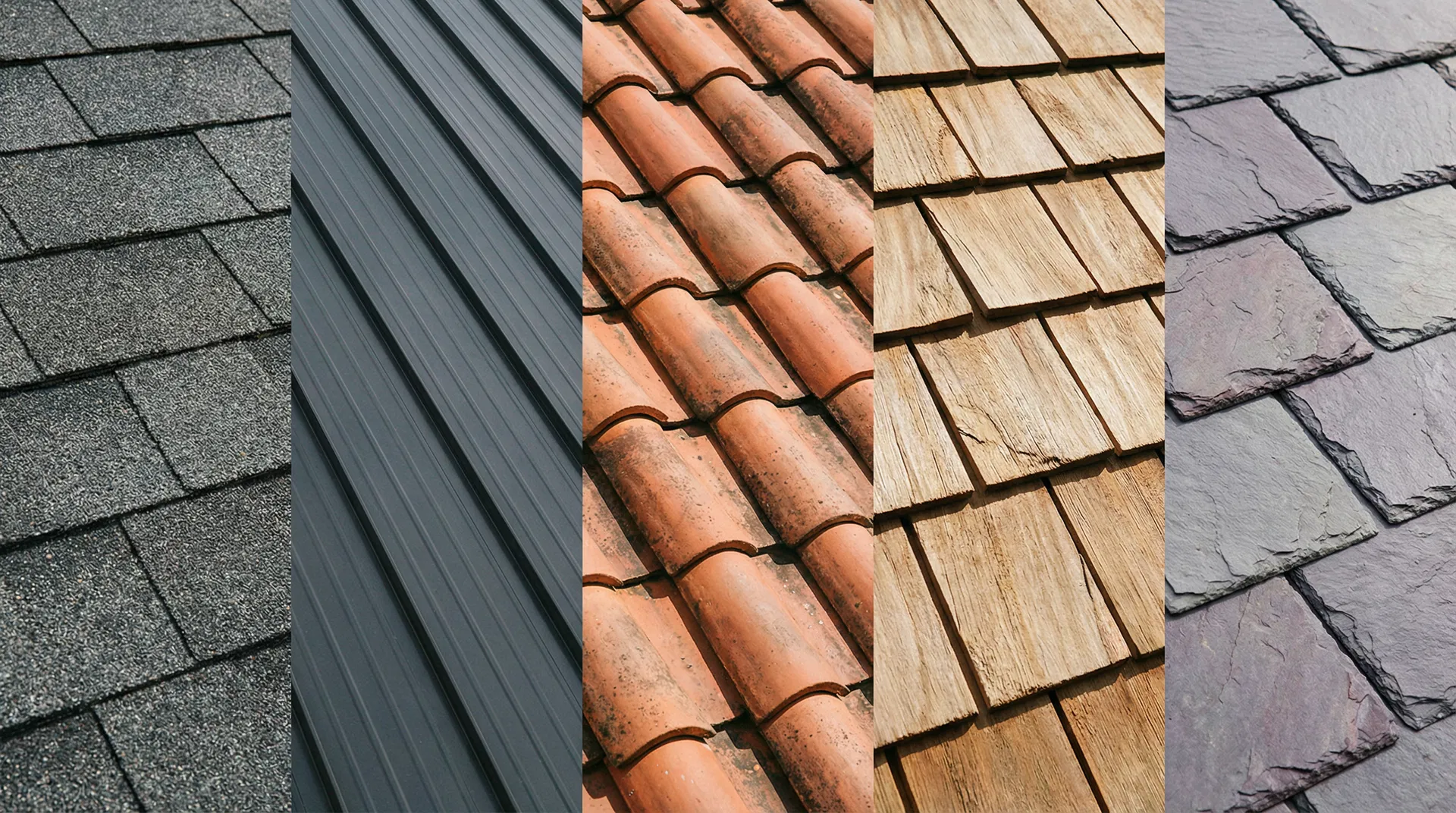
Homeowner's guide to roof types β€” asphalt shingles, metal roof, tile roof, wood shake, and slate roofing materials

The Homeowner's Guide to Roof Types & Cleaning

Shingle, cedar, slate, tile, metal, and flat roofs β€” learn how each type gets dirty, what damages it, and the correct cleaning approach for your specific roof.

Read Full Guide β†’
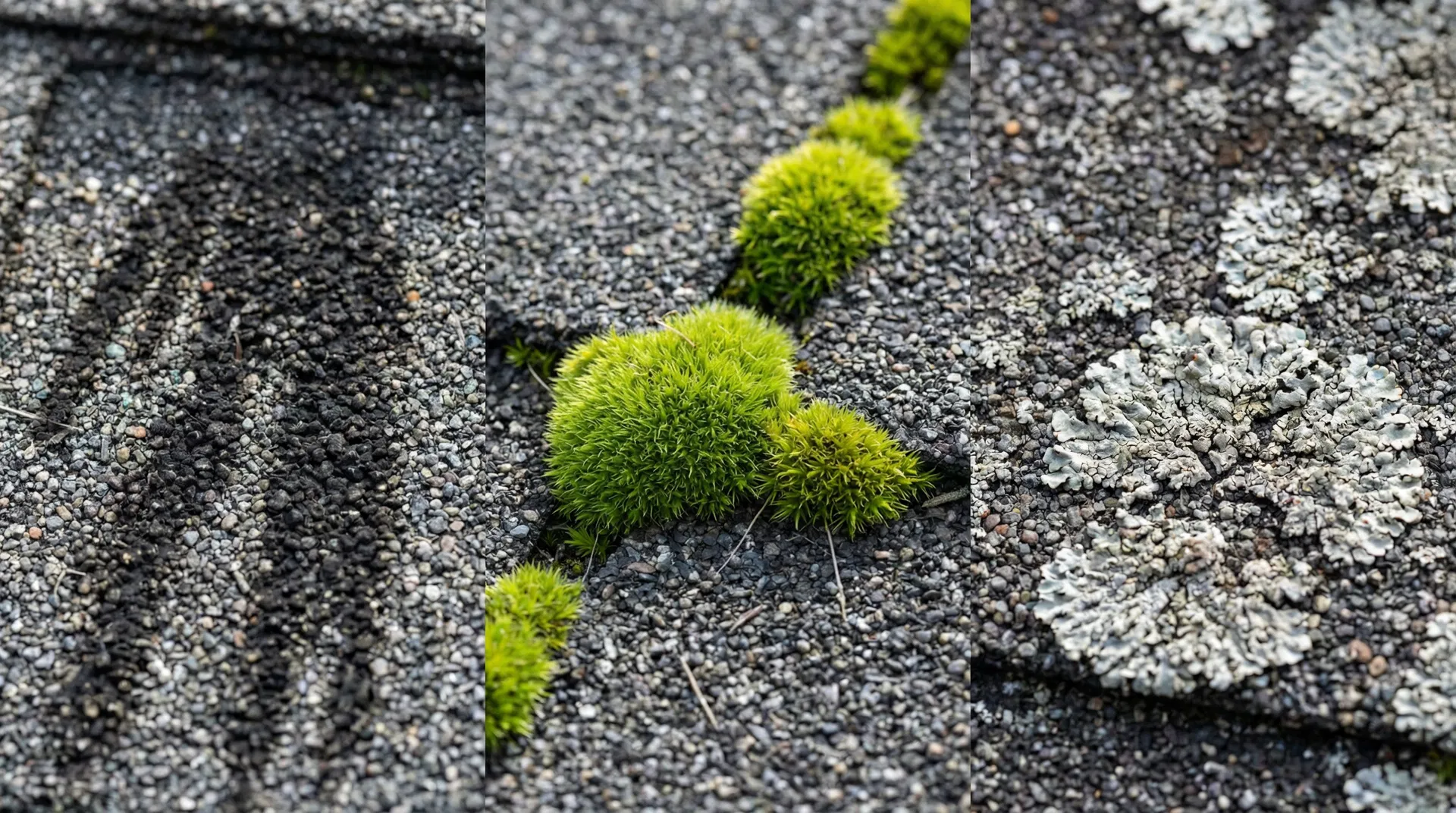
What's growing on your roof visual identification guide β€” moss, lichen, algae, and plant growth on roof shingles

What's Growing on Your Roof? A Visual ID Guide

Identify algae, moss, lichen, mold, and other growths by sight. Includes risk levels, damage timelines, and recommended treatment for each organism.

Read Full Guide β†’

🏠 Home Seller Guides

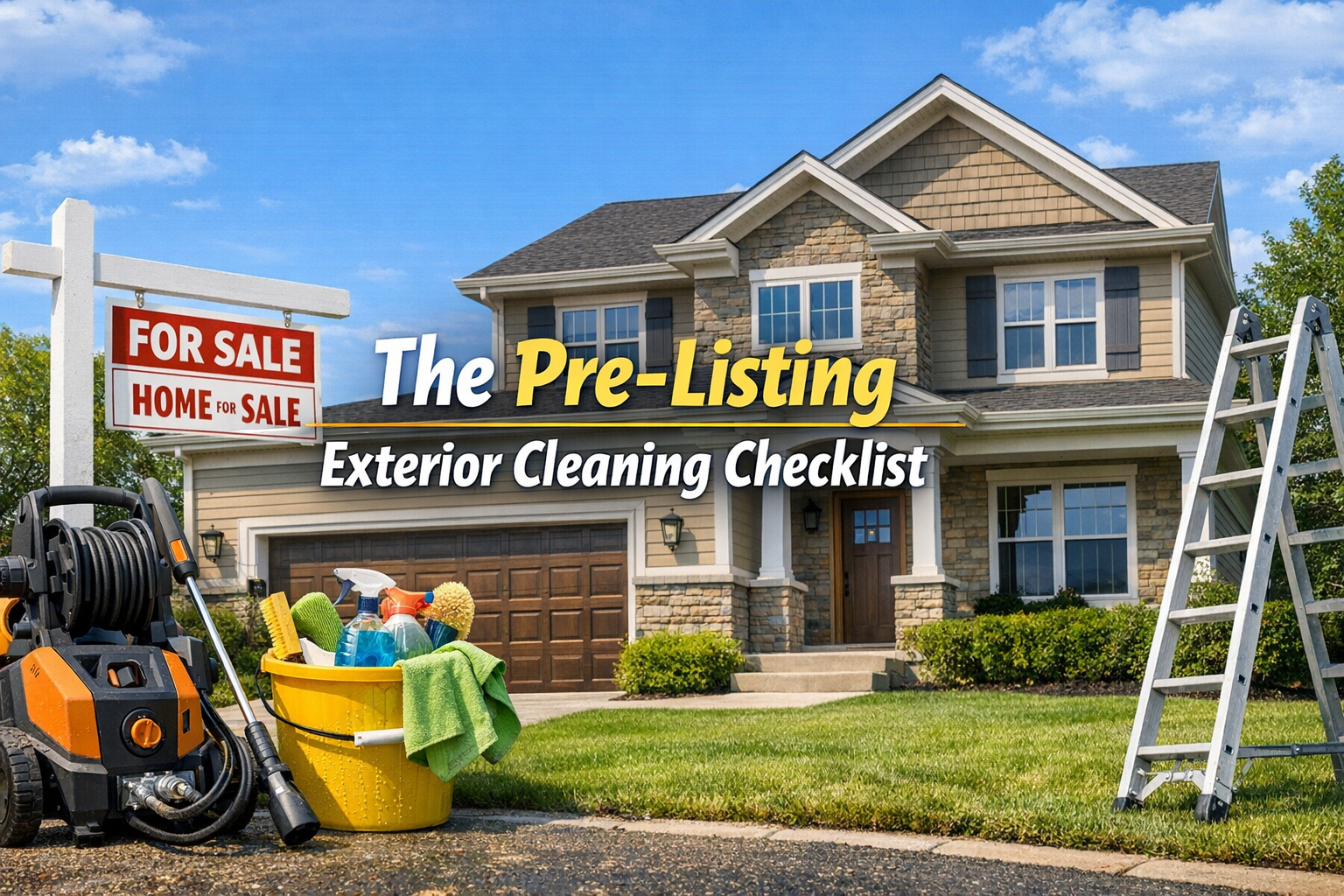
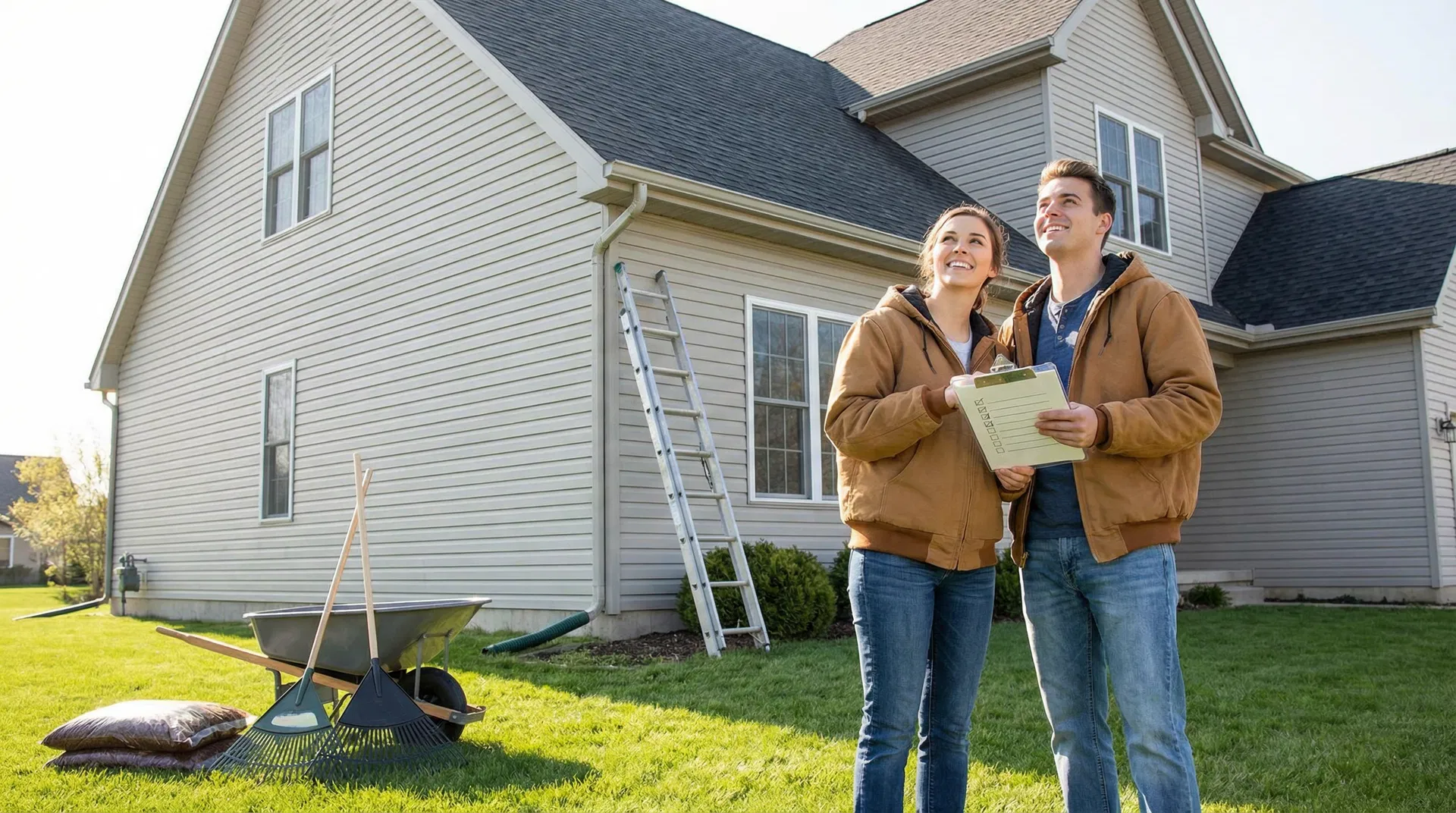
Pre-listing exterior cleaning checklist β€” home for sale with pressure washer, cleaning supplies, and ladder

The Pre-Listing Exterior Cleaning Checklist

A room-by-room, surface-by-surface checklist for maximizing curb appeal before listing. Includes timeline, priority order, and ROI estimates for each task.

Read Full Guide β†’
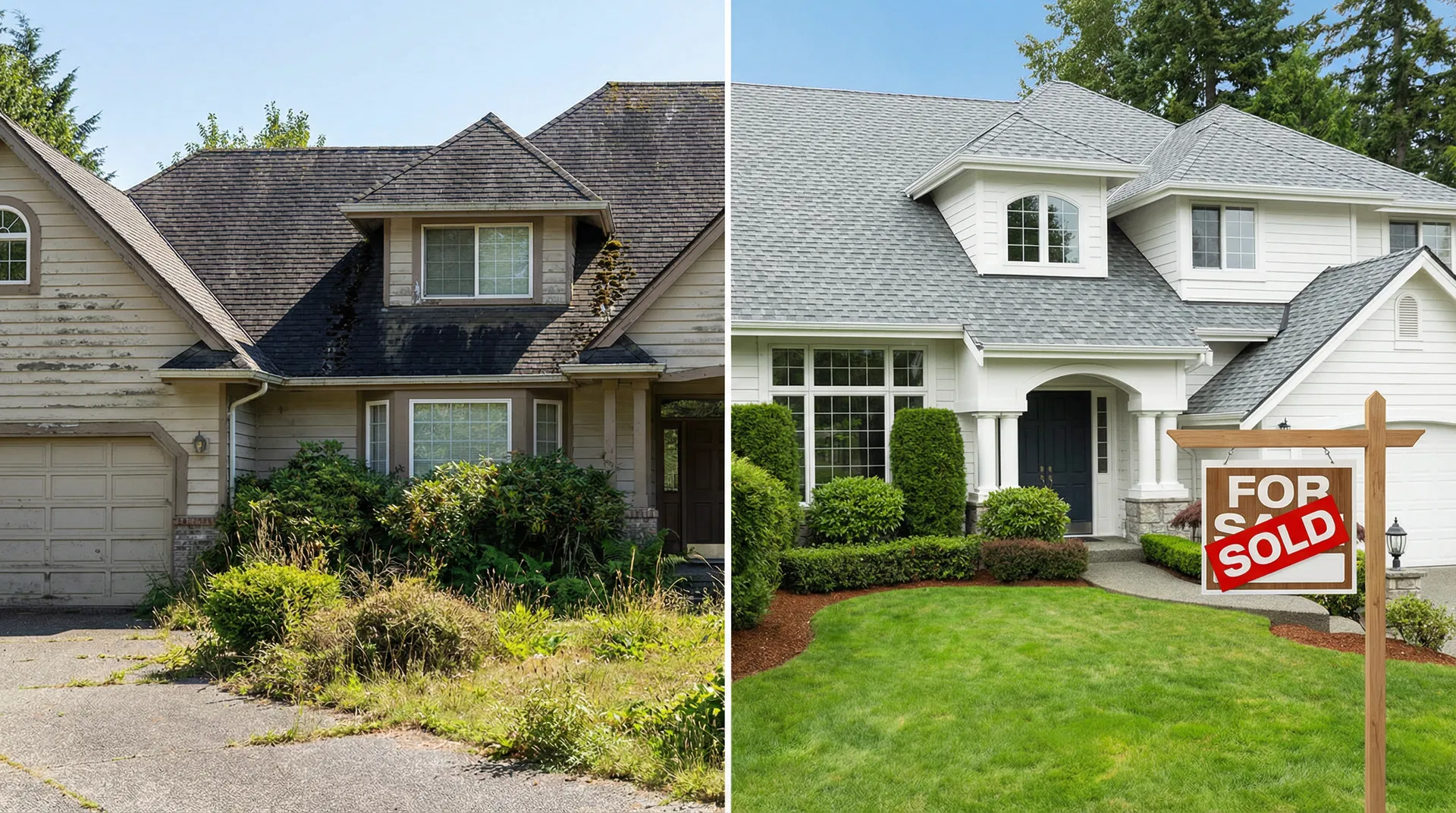
ROI of exterior cleaning before a home sale β€” before and after comparison showing dirty vs clean home exterior with dollar sign ROI graphic

The ROI of Exterior Cleaning Before a Home Sale

Hard data on how roof cleaning, pressure washing, and curb appeal improvements affect appraisal values, days on market, and final sale price.

Read Full Guide β†’

πŸ” Home Buyer Guides

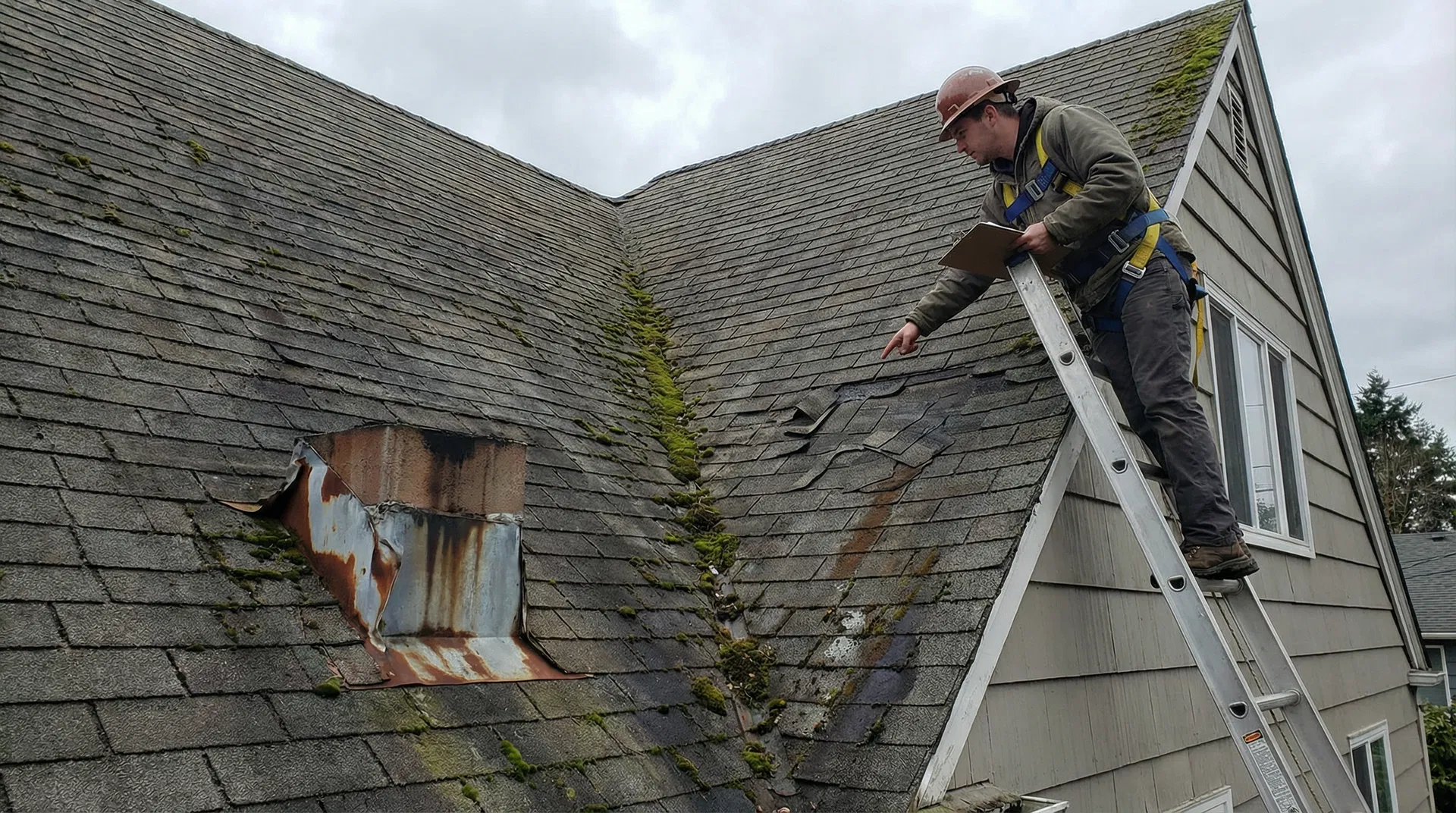
Roof inspection red flags β€” leaks, damaged shingles, pest problems, flashing failure, mold and rot warning signs by Forza Roof Cleaning Columbus Ohio

Roof Inspection Red Flags Every Home Buyer Should Know

What to look for during a home inspection, how to read a roof report, and when to negotiate repairs vs. walk away. Protect your investment before closing.

Read Full Guide β†’
New homeowner exterior maintenance playbook β€” seasonal tips, home care tasks, and DIY guides for yard and roof

The New Homeowner's Exterior Maintenance Playbook

Your first-year guide to maintaining your new home's exterior. Covers roof, gutters, siding, driveway, landscaping, and seasonal maintenance schedules.

Read Full Guide β†’

πŸ’Ό Professional Guides

The Realtor's Guide to Exterior Cleaning as a Listing Tool β€” aerial view of suburban homes with sold sign, presented by Forza Roof Cleaning Columbus Ohio

The Realtor's Guide to Using Exterior Cleaning as a Listing Tool

How top-producing agents use professional exterior cleaning to win listings, reduce days on market, and increase sale prices. Includes scripts and talking points.

Read Full Guide β†’
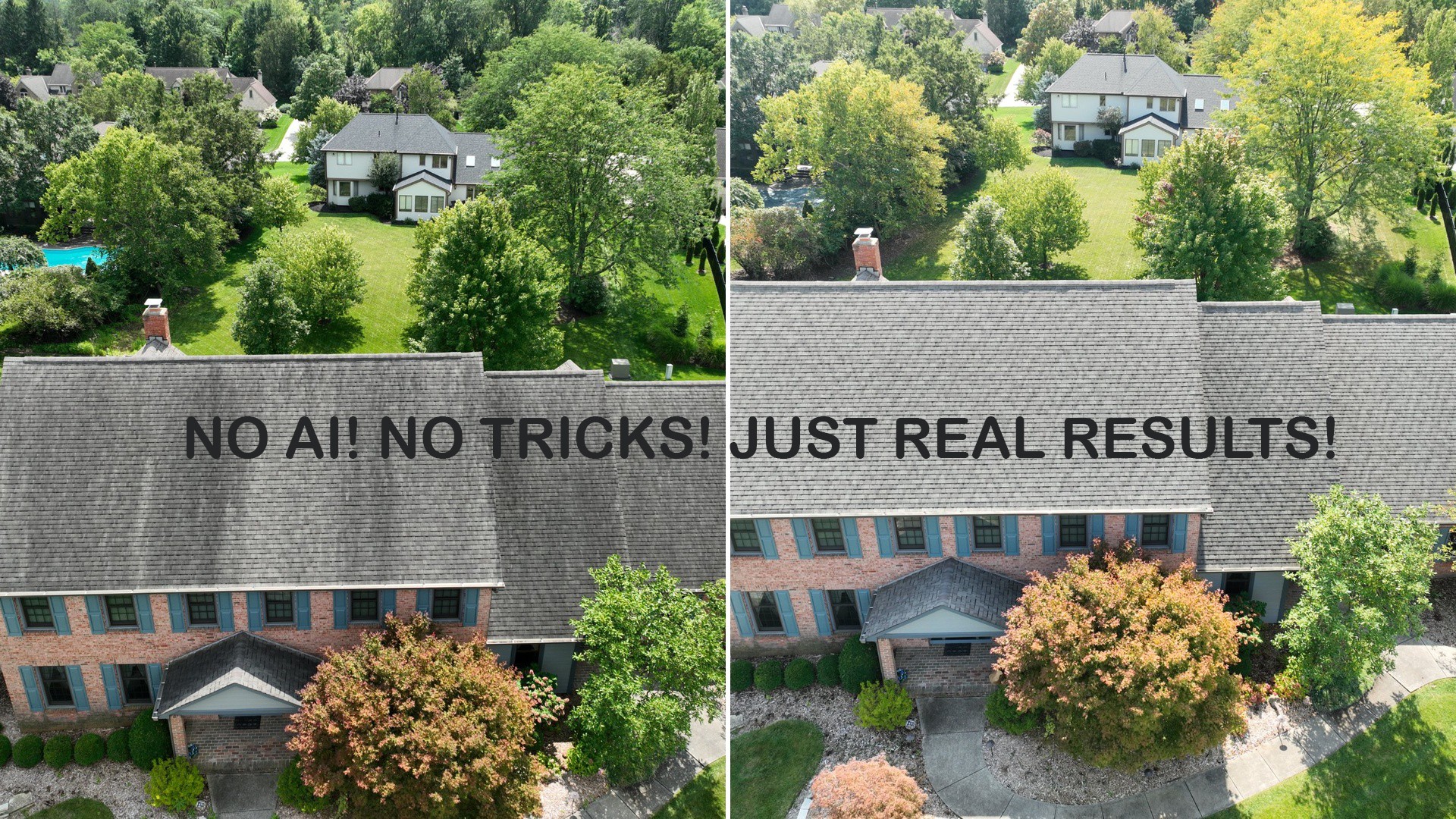
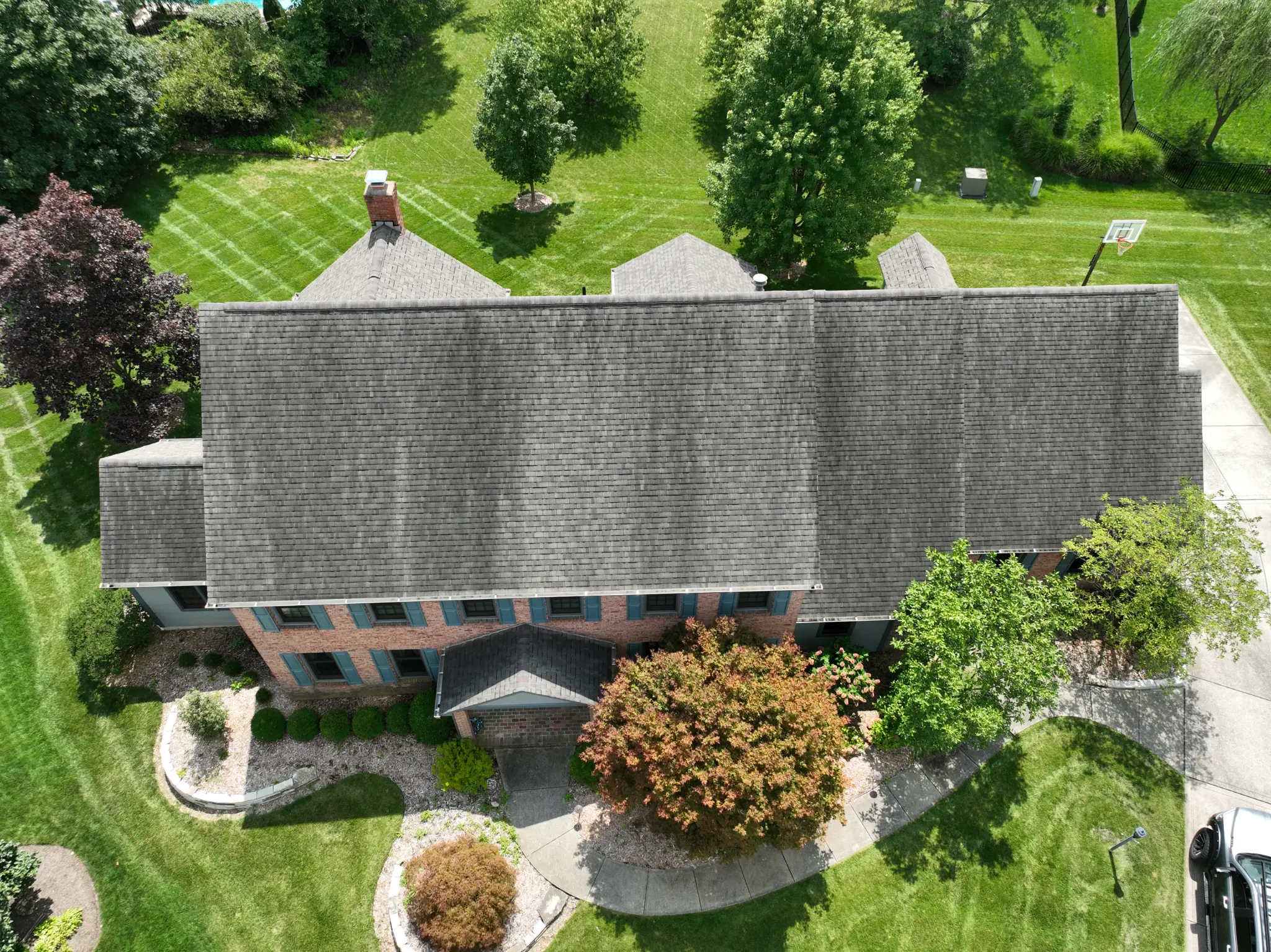
Before and after real roof cleaning results β€” aerial drone view showing dirty roof vs clean roof, no AI no tricks just real results

Before & After: Real Roof Cleaning Results

See real transformations on shingle, cedar, slate, and commercial roofs. Includes what to expect after treatment and the 60-90 day timeline for full results.

Read Full Guide β†’

πŸ›  Interactive Tools & Calculators

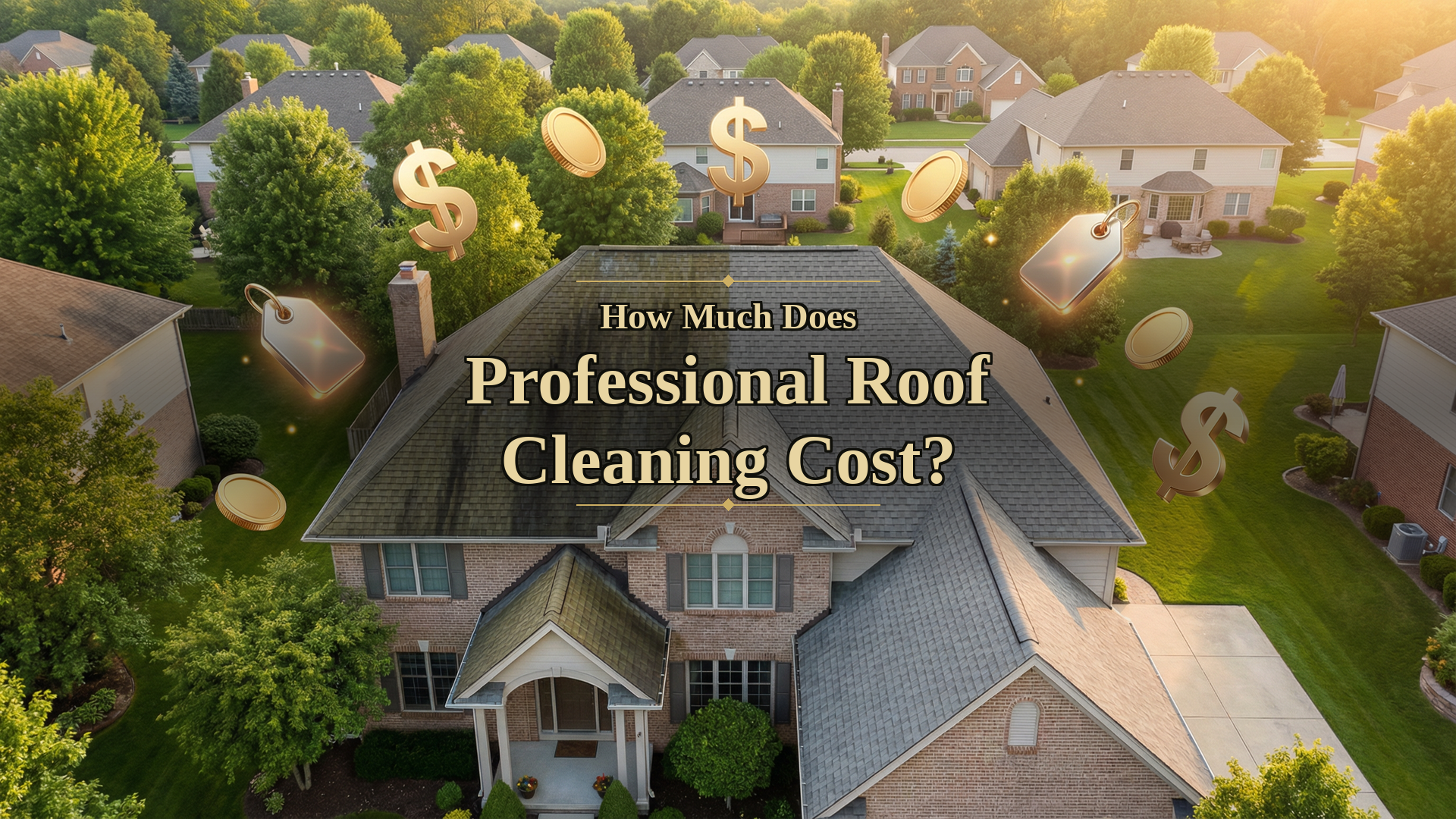
How much does professional roof cleaning cost β€” aerial drone view of residential shingle roof with dollar signs and pricing symbols

How Much Does Professional Roof Cleaning Cost?

Transparent pricing guide with cost ranges by roof type, size, and condition. Includes factors that affect price and how to compare quotes from different companies.

Read Full Guide β†’
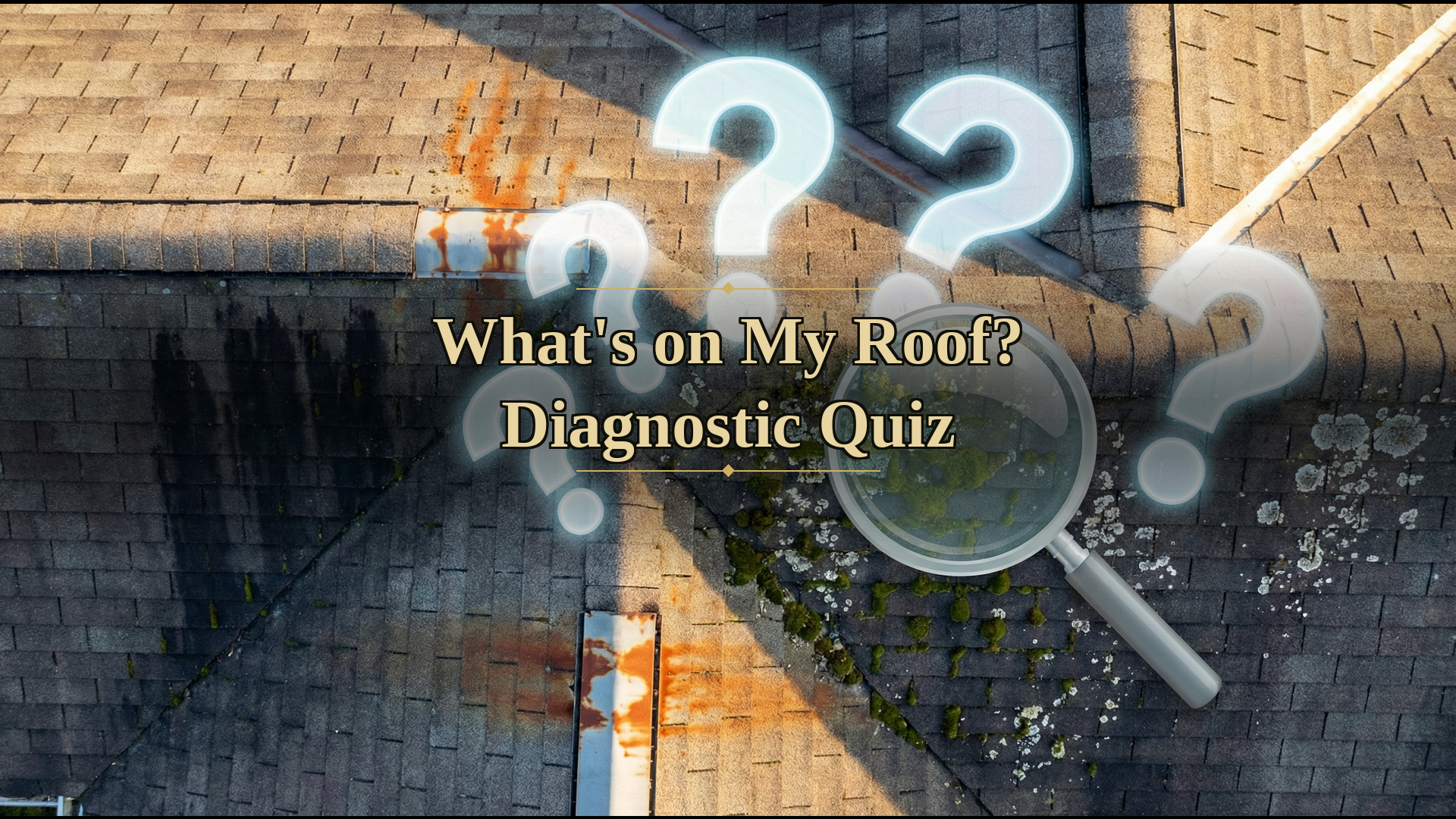
What's on my roof diagnostic quiz β€” close-up aerial view of roof with algae moss lichen and question marks

What's on My Roof? Diagnostic Quiz

Answer a few quick questions about what you see on your roof and get an instant diagnosis with recommended next steps and urgency level.

Take the Quiz β†’

Quick Reference: What's on My Roof?

Use this table to identify what you're seeing and understand the risk level.

What You See What It Is Risk Level Safe Treatment Urgency
Dark streaks running down shingles Gloeocapsa Magma (cyanobacteria) Medium–High Treatment biocide solution Within 1 season
Thick green/brown fuzzy patches Moss High Treatment + post-treatment Promptly β€” lifts shingles
Hard white/gray crusty patches Lichen High Treatment (multi-application) Promptly β€” bonds to material
Thin green film, slippery when wet Green algae Low–Medium Treatment biocide solution Within 1–2 seasons
Orange/rust streaks on metal Oxidation or algae staining Medium Metal-safe treatment Within 1 season
Black patches on cedar shakes Algae + moisture damage High Cedar-safe treatment only Promptly β€” wood damage
Dark discoloration on tile Algae, mold, or lichen Medium Tile-safe treatment Within 1–2 seasons
Granules in gutters Shingle granule loss (not bio-growth) High Roof inspection β€” may need replacement Inspect immediately
In-Depth Guide

Gloeocapsa Magma: The Full Story

Gloeocapsa Magma is a type of cyanobacteria β€” a photosynthetic microorganism β€” that has adapted to live on rooftops across the eastern United States. It's been around for decades, but it became dramatically more common in the 1970s when asphalt shingle manufacturers began adding crushed limestone as a filler to reduce costs. That limestone is Gloeocapsa Magma's food source.

Why Does It Look Black?

The organism itself is actually blue-green. The dark, almost black color you see on roofs is a protective pigment β€” a dark sheath the bacteria produces to shield itself from UV radiation. It's essentially sunscreen. This is why the streaks get darker over time: the colony grows and produces more pigment.

How Does It Spread?

Gloeocapsa Magma spreads via airborne spores. Wind, birds, and squirrels carry it from roof to roof β€” which is why you'll often see entire neighborhoods develop the same streaking pattern within a few years of each other. Once it establishes on your roof, it grows slowly at first, then accelerates as the colony expands.

Is It Actually Damaging My Roof?

Yes β€” though the damage is gradual. The bacteria feeds on the limestone in your shingles, which accelerates granule loss. Granules are the protective layer that shields the asphalt from UV degradation. As granules are lost, the asphalt beneath becomes brittle and cracks. Studies have shown that untreated Gloeocapsa Magma infestations can reduce an asphalt shingle roof's lifespan by 10–15 years.

What's the Right Treatment?

The Asphalt Roofing Manufacturers Association (ARMA) recommends a solution of water and laundry-strength liquid chlorine bleach applied at low pressure β€” what the industry calls "treatmenting." The bleach kills the bacteria at the cellular level. Pressure washing, by contrast, only removes the surface staining while leaving the root colony intact β€” and physically removes granules in the process, which is why it voids most shingle warranties.

After treatment, the streaks don't disappear immediately. The dead bacteria gradually wash away over several rain cycles β€” typically 30–90 days. A properly treated roof should remain clean for 3–5 years.

Bottom line: Black streaks are not a cosmetic problem you can ignore. They're an active biological infestation that's shortening your roof's lifespan. The fix is straightforward and far cheaper than a premature roof replacement.
In-Depth Guide

Moss on Your Roof: A Closer Look

Moss is a non-vascular plant that thrives in cool, moist, shaded environments β€” which describes the north-facing slopes of most Columbus roofs for much of the year. Unlike algae, moss has root-like structures called rhizoids that physically penetrate and grip the surface they grow on.

Why Moss Is More Serious Than Algae

When moss grows thick on a roof, it acts like a sponge β€” absorbing and holding moisture against the roofing material for extended periods. On asphalt shingles, this accelerates granule loss and causes the asphalt to soften and crack. On cedar shakes, trapped moisture causes rot. On slate and tile, it can work into cracks and crevices and cause cracking during freeze-thaw cycles.

The rhizoids also physically lift the edges of shingles as the moss colony expands, creating gaps that allow wind-driven rain to penetrate the roof deck. This is how moss causes leaks β€” not through the shingle itself, but by lifting it. All the while, adding to the roof's demise.

The Worst Thing You Can Do

Many homeowners instinctively try to scrape or brush moss off. This is counterproductive. Dry scraping breaks the moss into fragments, each of which can re-establish as a new colony. It also removes granules from asphalt shingles and can crack brittle tile. The correct approach is to kill the moss first with a biocide solution, then allow it to die and naturally shed over several rain cycles. It's the most gentle way to safely remove moss and lichen from a roof.

Prevention After Treatment

Once moss is treated and removed, the roof is free of bio and continues to shed water and shield the interior of the home from the elements as designed. Keeping the roof free from bio helps it live out its projected lifespan and oftentimes, outliving it.

In-Depth Guide

Treatment vs. Pressure Washing: The Complete Guide

The terms "roof cleaning" and "pressure washing" are often used interchangeably by homeowners β€” but they describe very different processes with very different outcomes for your roof.

What Is Pressure Washing?

Pressure washing uses high-pressure water (typically 3,0000–4,000 PSI) to blast contaminants off surfaces. It works well on concrete driveways and brick walls β€” surfaces that can withstand the force. On a roof, that same pressure physically removes the granules from asphalt shingles (the protective layer that shields the asphalt from UV), cracks brittle slate and tile, splits cedar shakes, and can force water under flashing and into the roof deck.

Most asphalt shingle manufacturers β€” including GAF, Owens Corning, and CertainTeed β€” explicitly state in their warranty documentation that pressure washing voids the warranty. The ARMA (Asphalt Roofing Manufacturers Association) has published guidelines specifically recommending against pressure washing.

What Is Forza's Method Of Cleaning?

Our gentle cleaning process (typically under 70 PSI β€” less than a garden hose) delivers a water-soluble biodegradable biocide solution to kill and remove bio-growth. The chemistry does the work, not the pressure. The solution penetrates the bio-growth and kills it at the cellular level β€” including the root structures that pressure washing leaves behind.

Because our system kills the organism rather than just scalping it away, results last significantly longer: typically 5-7 years versus 6–12 months for pressure washing. This is why all the shingle manufacturer's forbid the use of pressure on the roof. Our gentle process rids the roof of the damaging bio safely without damaging the roof.

What About DIY Bleach Solutions?

A diluted bleach solution (typically 1 part bleach to 2 parts water) applied with a garden sprayer is the DIY version of roof cleaning β€” and it can work for mild algae growth on shingles. The risks are: over-concentration can damage plant beds and landscaping; it requires working on or near the roof; and it doesn't address moss or lichen effectively without the proper pre-treatment and specific dwell time. For anything beyond light algae staining, professional application is safer and more effective.

Warning: If a contractor quotes you for "pressure washing your roof," ask them specifically what PSI they'll be using and whether their method is ARMA-approved. If they can't answer clearly, look elsewhere.
In-Depth Guide

Can You Clean Your Own Roof? An Honest Assessment.

We're going to be straight with you here, because we think you deserve an honest answer rather than a sales pitch.

When DIY Can Work

If you have a single-story home with a low-pitch roof, mild algae staining (not moss or lichen), and you're comfortable working on a ladder, you can treat light Gloeocapsa Magma growth yourself. The ARMA-recommended DIY solution is 1 part laundry-strength liquid chlorine bleach to 1 part water, applied with a garden pump sprayer. Pre-wet your landscaping, apply the solution, let it sit for 15–20 minutes, then rinse with a garden hose. Repeat if needed.

When to Call a Professional

  • Steep pitch: Any roof pitch above 4:12 significantly increases fall risk. Wet roofs are extremely slippery.
  • Moss or lichen: These require stronger solutions and often multiple applications. Improper treatment can make lichen worse.
  • Cedar, slate, or tile: These materials require specialized chemistry and technique. The wrong product can permanently damage them.
  • Multi-story home: The fall risk at height is not worth the cost savings.
  • Active warranty: DIY treatment may void your shingle warranty if not done per ARMA guidelines.

The Real Cost Comparison

A professional treatment for a typical Columbus home runs $700–$2,000. A fall from a roof β€” even a one-story fall β€” can result in injuries costing tens of thousands of dollars in medical bills and lost work. The math strongly favors hiring a professional for anything beyond the most accessible, low-pitch sections of a single-story home.

Ready to Get a Professional Opinion?

We'll fly a drone over your roof, photograph every problem area, and send you a full report with a no-obligation estimate. Most homeowners are surprised by what they see.

πŸ“ž Call Now Get Free Quote